Subsea Infrastructure Integrity Assessment
Service
Critical marine infrastructure cannot be managed solely through periodic visual inspection or reactive intervention. Asset integrity requires structured assessment, quantitative data acquisition and traceable engineering evaluation based on defined assessment criteria, documented assumptions and stated limitations.
We provide Subsea Infrastructure Integrity Assessment services designed to support operators with defensible technical evidence for maintenance prioritization, fitness-for-service determination and remaining life estimation.
Our methodology integrates:
Risk-informed inspection planning
High-resolution subsea data acquisition using instrumented ROV platforms
Metrology-grade 3D baseline modelling
Structured anomaly classification, severity ranking and linkage to governing degradation mechanisms
This framework supports integrity management decisions across the full asset lifecycle — from baseline establishment to degradation monitoring and life-extension evaluation.
Deliverables
We support asset operators with:
Baseline Condition Establishment
Creation of a documented structural condition baseline for submerged assets, including dimensional capture and defect mapping with traceable measurements.
Anomaly Identification & Engineering Assessment
Detection, classification and quantitative/qualitative evaluation of structural discontinuities (corrosion, cracking, deformation, scour, coating breakdown, connection distress, etc.) with severity ranking against defined criteria and evaluation of structural and operational implications.
Fitness-for-Service (FFS) Assessment
Engineering evaluation aligned with recognized frameworks (e.g., API 579-1/ASME FFS-1 or equivalent structural assessment standards), using explicit assumptions, input data and acceptance criteria.
Remaining Life Estimation
Projection of degradation progression based on observed condition and measurable parameters, with stated basis, assumptions and assessment boundaries.
Operational Risk Assessment
Short- and long-term risk evaluation considering structural condition, degradation mechanisms, operational exposure and consequence of failure.
Structured Remedial Actions
Mechanism-based corrective and mitigation measures, prioritized by integrity risk and consequence, supporting defensible maintenance planning.
Repeatable Inspection Framework
Structured and reproducible inspection protocol enabling condition trending and degradation rate tracking.
Engineering-Grade Reporting
Documentation suitable for technical and regulatory review, including traceable datasets, dimensional extracts, clearly stated methodology and assessment assumptions.
Technical Framework
Our technical methodology integrates:
Risk-informed inspection scope development
Identification and closure of critical data gaps required for defensible integrity evaluation
Project-specific Work Method Statements (WMS) and HSE documentation
Multi-sensor subsea data acquisition (optical, acoustic and spatial measurement systems)
Structured anomaly classification and documentation logic
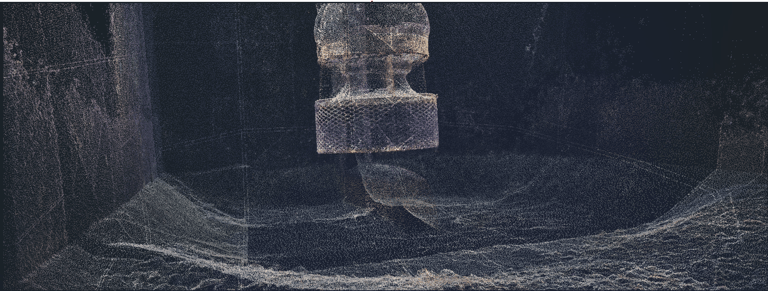
3D photogrammetric and spatial modelling for spatially referenced baseline creation
Data packages structured for follow-up assessment and comparative re-inspection
This framework ensures technical depth, traceability and reproducibility.
Applicable Asset Types
Applicable to:
LNG import/export terminal seawater intake systems
FSRU intake and regasification systems
Thermal power plant cooling systems
Oil refinery and petrochemical cooling systems
Offshore and nearshore oil and gas infrastructure
Subsea pipelines and free span zones
Subsea power and energy transmission assets
Port and marine civil infrastructure
Bridge foundations and underwater structural elements
Selected Project Applications


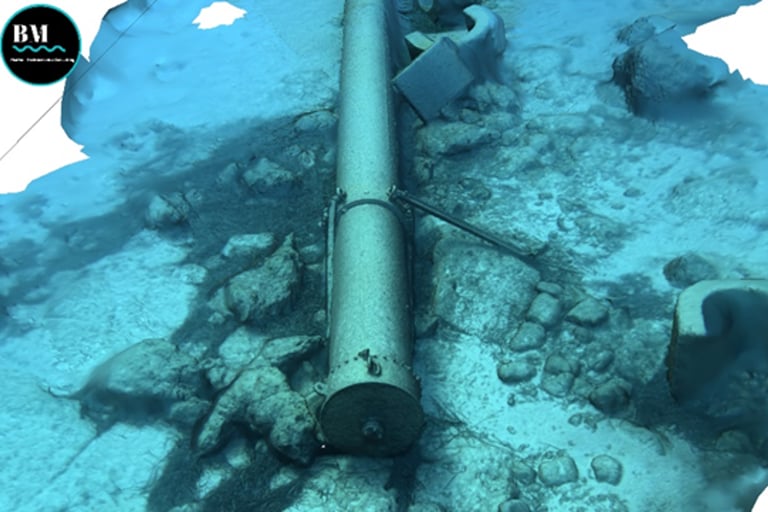
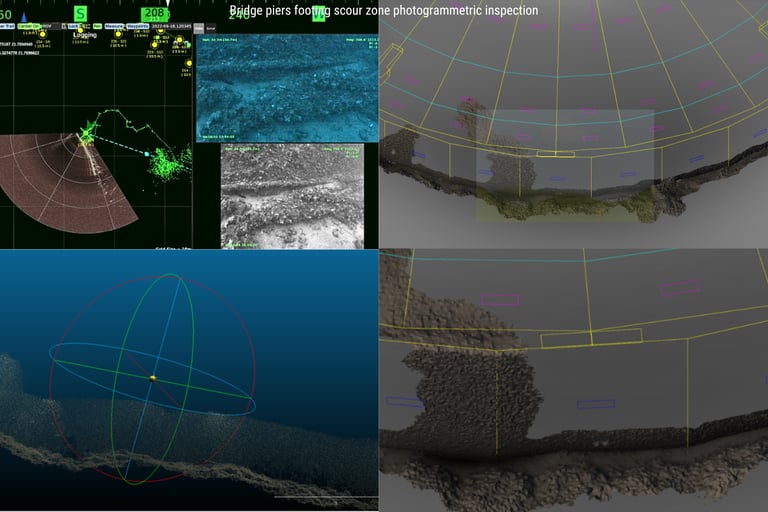
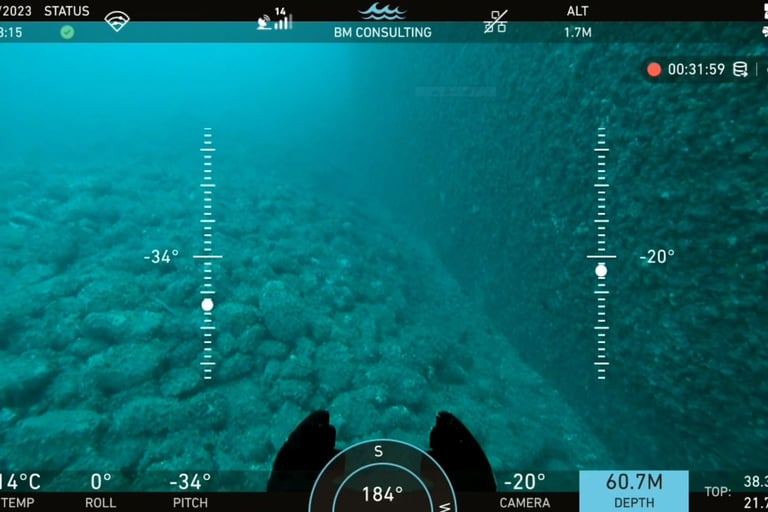
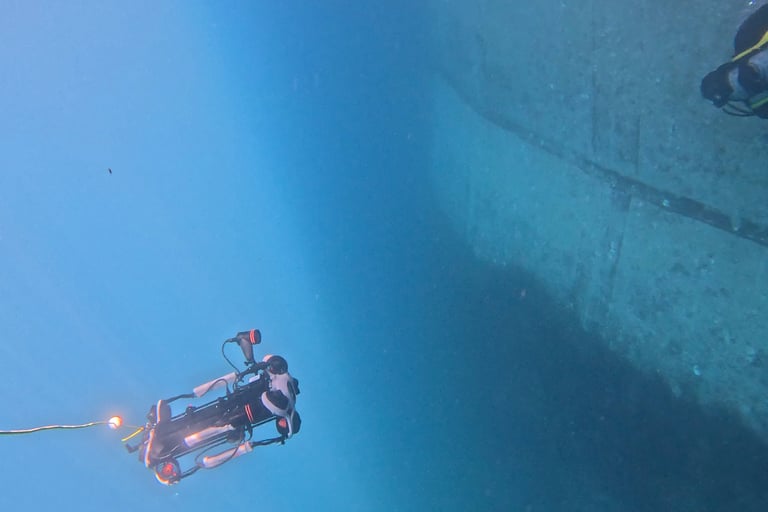
Long-term subsea inspection and scour assessment of major bridge foundations and underwater structural elements
Address
131 Praxitelous Street, Piraeus 185 32
© Copyright 2024 BMConsulting All Rights Reserved